


The Night Driverless Cars Woke a City

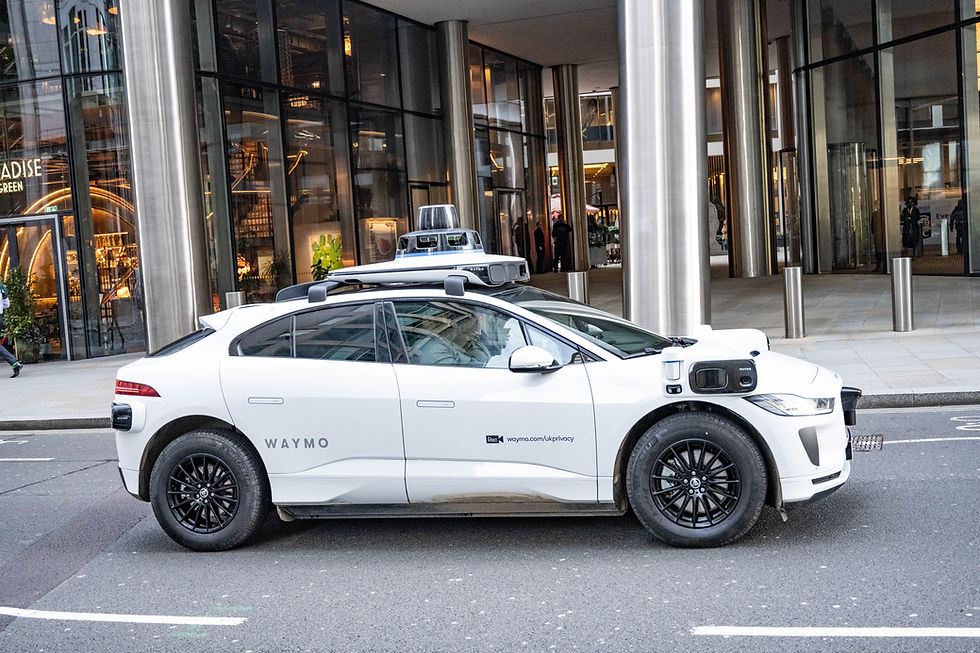
Residents in London recently found themselves dealing with an unexpected late-night disturbance — not from rowdy crowds or roadworks, but from driverless cars.
In the early hours, a fleet of autonomous vehicles reportedly gathered in a local area and began making repeated noise, waking residents who were caught off guard by what many described as a strange and frustrating situation.
While the technology behind self-driving cars continues to advance, incidents like this are highlighting the real-world challenges that come with it.
Autonomous vehicles are designed to operate safely with minimal human input, using sensors, cameras, and software to make decisions in real time. But like any technology, they aren’t perfect — especially during testing.
In London, residents have already complained about pilot vehicles repeatedly entering unsuitable streets and reversing out while emitting loud warning sounds in the middle of the night.
Elsewhere, similar fleets of driverless taxis have gathered in car parks overnight, where a software issue caused them to honk at each other repeatedly — sometimes for hours — as they reacted to one another’s movements.
In simple terms, vehicles were responding to nearby cars as if there was a potential hazard, triggering a chain reaction of honking. What started as a safety feature quickly turned into a noisy feedback loop.
The core issue often comes down to how autonomous systems interpret their environment.
For example, in the car park incident, the vehicles had been programmed to honk when another car got too close while reversing.
This works well on public roads, but in a tightly packed parking area where cars are constantly moving, it created repeated alerts — with vehicles effectively “reacting” to each other over and over again.
In other cases, navigation systems have struggled with unusual layouts like dead-end streets, causing vehicles to repeat the same manoeuvres or return to the same location multiple times.
These are often described as “edge cases” — scenarios that don’t appear frequently in training data but can cause unexpected behaviour when they do.
While no one was injured in these incidents, they highlight a bigger issue: autonomous vehicles don’t just need to be safe — they also need to behave predictably in everyday environments.
The UK government has been actively exploring how autonomous vehicles can be rolled out safely, with future regulation expected to shape how these vehicles operate on public roads.
But as these incidents show, real-world conditions are far more complex than controlled testing environments.
Even small glitches — like a navigation loop or an over-sensitive safety feature — can quickly turn into wider issues when multiple vehicles interact at the same time.
The idea of cars honking at each other in the middle of the night might sound amusing at first. But it’s also a clear sign that even the most advanced systems can behave unpredictably in the real world.
As autonomous vehicles move closer to mainstream use, incidents like this are likely to shape how they’re regulated, insured, and ultimately accepted by the public.
Because one thing is certain: when it comes to new technology, it’s not just about whether it works — it’s about how it behaves when it doesn’t.


Comments