


Liverpool’s Pothole Breaking Point


Most people choose where to live based on factors such as schools, house prices, jobs or access to transport.
But in Liverpool, a surprising new statistic suggests road conditions may be influencing that decision too.
According to recent survey data, 16% of Liverpool residents have considered moving home because of the condition of local roads and the persistent problem of potholes.
The remarkable finding highlights just how frustrated some motorists have become with the state of parts of the city's road network.
While potholes are often joked about as an unavoidable feature of British roads, the latest figures suggest many drivers no longer see them as a minor annoyance.
For some, they're becoming a genuine quality-of-life issue.
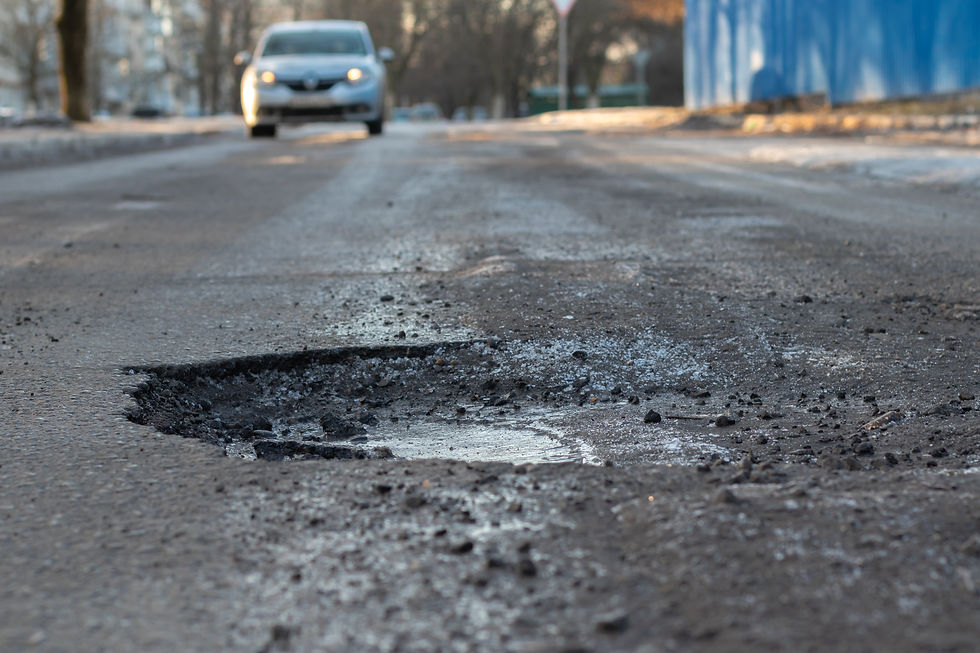
Potholes have become one of the most visible signs of the growing pressure facing local road networks.
Across the UK, more than 1.2 million potholes were reported between 2021 and 2025, according to recent industry analysis.
Vehicle breakdowns linked to damaged tyres, wheels and suspension systems have also risen, increasing the financial burden on drivers.
The problem has worsened in many areas as road surfaces age while councils struggle to balance maintenance budgets against a growing repair backlog.
Nationally, local authorities in England and Wales face an estimated £18.62 billion road repair backlog, according to an Annual Local Authority Road Maintenance (ALARM) survey.
In other words, Liverpool is far from alone, but the city has consistently ranked among the UK's pothole hotspots.
Recent data showed that Liverpool recorded more than 58,000 reported potholes between 2021 and 2025, placing it among the areas where drivers are most likely to encounter road surface defects.
Research highlighted Liverpool as one of the cities where residents believe pothole repairs can take particularly long to complete, contributing to frustration among motorists.
When motorists repeatedly encounter the same damaged roads day after day, irritation can gradually turn into something more serious.
Industry research suggests that more than a quarter of UK drivers have experienced vehicle damage caused by potholes, while many report spending hundreds of pounds on repairs.
For households already dealing with rising living costs, these unexpected expenses can quickly add up.
What makes the Liverpool finding particularly fascinating is that it moves beyond vehicle damage and into the realm of lifestyle decisions.
When residents repeatedly experience delays, vehicle damage and frustration during everyday journeys, the condition of local infrastructure starts to shape how they feel about where they live.
The idea of moving house because of potholes may sound extreme, but it becomes easier to understand when those problems are encountered every single day.
Many people assume potholes simply aren't being fixed, but the reality is often more complicated.
Highway authorities across the country face a growing challenge as ageing road surfaces deteriorate faster than available budgets can support.
While councils continue carrying out repairs, many experts argue that long-term road reconstruction is needed in addition to routine patching.
Without that deeper investment, potholes can return repeatedly, especially following periods of wet weather and heavy traffic.
The Liverpool story reflects a broader national debate about infrastructure investment.
Roads are often unseen until something goes wrong. Few people think about road maintenance when surfaces are smooth and functioning properly.
When deterioration becomes widespread, however, it quickly becomes one of the most visible public concerns.
The fact that some residents are reportedly considering relocating because of road conditions underlines how important reliable infrastructure is to everyday life.
Potholes have long been viewed as a frustrating fact of British motoring, but the latest Liverpool figures suggest the problem may be reaching a new level.
Whether or not people ultimately pack their bags and leave, the message is clear: for many motorists, the state of the roads is no longer just an inconvenience. It's becoming a reason to rethink where they call home.


Comments